
Guanping Xu, Zirui Zhao, Muqing Su & Hai-Feng Li
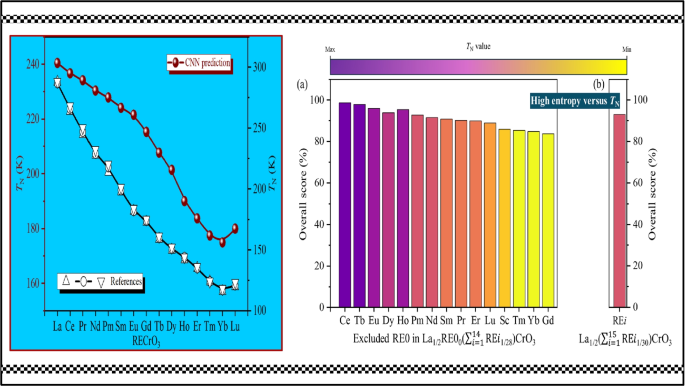
Abstract Multiferroic materials, particularly rare-earth orthochromates (RECrO\(_3\)), have garnered significant interest due to their unique magnetic and electric-polar properties, making them promising candidates for multifunctional devices. Although extensive research has been conducted on their antiferromagnetic (AFM) transition temperature (N\(\acute{\mathrm{e}}\)el temperature, \(T_\mathrm{N}\)), ferroelectricity, and piezoelectricity, the effects of doping and substitution of rare-earth
More to Read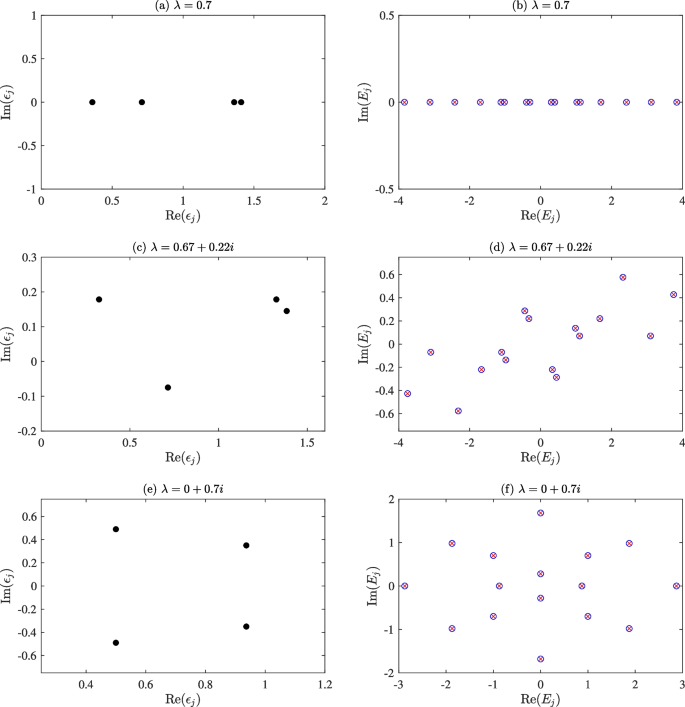
Robert A. Henry, D. C. Liu & Murray T. Batchelor
Abstract The XY spin chain is a paradigmatic example of a model solved by free fermions, in which the energy eigenspectrum is built from combinations of quasi-energies. In this article, we show that by extending the XY model’s anisotropy parameter \(\lambda\) to complex values, it is possible for two of the quasi-energies to become degenerate. In the non-Hermitian XY model, these quasi-energy degeneracies give rise to exceptional points (EPs) where eigenvalues and their corresponding eigenvecto
More to Read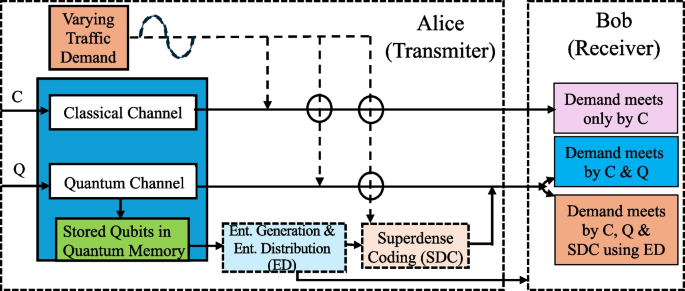
Chitra Shukla, Junaid ur Rehman & Symeon Chatzinotas
Abstract Over the past four decades, quantum communication has evolved as a dynamic interdisciplinary field, advancing theoretical concepts and practical implementations. This article provides a concise overview focusing on recent progress in different aspects of secure quantum communication and quantum computation protocols, which can be applied to several real-world applications in quantum networks. These protocols guarantee unconditional security while enhancing communication rates and compu
More to Read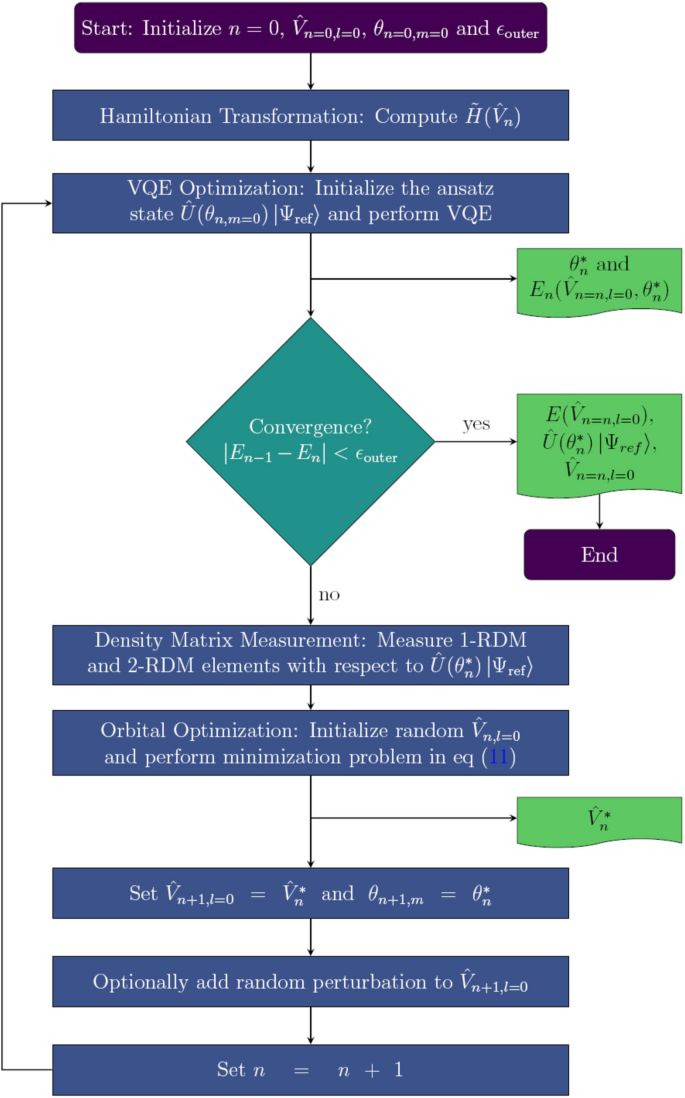
Yoga A. Darmawan, Angga D. Fauzi, Yanoar P. Sarwono & Rui-Qin Zhang
Abstract Near-term quantum devices offer promising avenues for addressing the electronic structure problem in quantum chemistry, yet their limited qubits and susceptibility to noise constrain algorithmic scalability. Although the variational quantum eigensolver (VQE) has shown potential for small-scale systems, further improvements are necessary to handle large basis sets and large many-electron molecules efficiently. In this work, we introduce RO-VQE, an improved approach derived from the earl
More to Read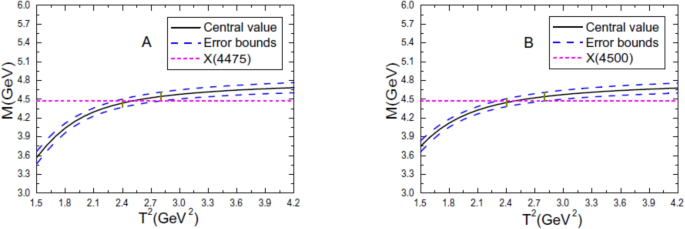
Zhi-Gang Wang
Abstract In this work, we introduce an explicit P-wave to construct the diquarks \([qc]_{\widehat{V}}\), then construct the local four-quark currents to explore the hidden-charm tetraquark states with the \(J^{PC}=0^{++}\), \(1^{+-}\), and \(2^{++}\) in the framework of the QCD sum rules at length. Our calculations indicate that the light-flavor SU(3) breaking effects on the tetraquark masses are tiny. The predictions support assigning the X(4475) and X(4500) as the \([uc]_{\widehat{V}}[\overli
More to Read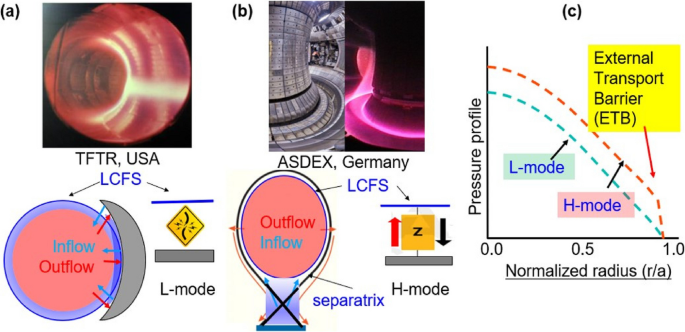
Hyeon K. Park
Abstract The variation of edge confinement modes such as L-mode, H-mode, QH-mode, and I-mode and transitions between these modes in toroidal devices is attributed to interplay between turbulent inflow plasmas from divertor and outflow plasmas from the edge in magnetic configuration with x-point. A concept of flow impedance is introduced to model edge confinement of plasmas in tokamak and stellarator. The core confinement improvement is largely due to effective core heating profile, and direct i
More to Read
Yuji Goto, Taku Gunji, Yongsun Kim & Chia Ming Kuo
Abstract The Electron-Ion Collider (EIC) is the world’s first electron + heavy-ion collider, and also performs polarized electron + polarized proton and light ion collisions, that will be constructed at Brookhaven National Laboratory in the USA. It will explore new areas of quantum chromodynamics (QCD) and foster the richness of nuclear and hadron physics. The EIC program will produce many new and very extensive results in nuclear and hadron physics over the next few decades. As an internationa
More to ReadN.T. Duy
A new view on gravity beyond Einstein by N.T. Duy* * Institute of Physics, Vietnam Academy of Science and Technology (VAST), Hanoi, Vietnam. Recent research published in The European Physical Journal C [3] has highlighted an important advancement in the study of modified gravity, providing new insights into the dynamics of black holes, stars, and gravitational wave emission. The researcher constructs a "perturbative f(R) theory" to modify Einstein's general relativity (GR) and makes predictions
More to ReadMurray Batchelor
Engineering spin-1 chains within the Haldane phase on a qudit quantum processor by Murray Batchelor The Haldane phase is a paradigmatic example of a symmetry protected topological (SPT) phase found in the spin-1 Heisenberg chain. The Haldane phase has several characteristic features. In addition to symmetry protection and the presence of an energy gap there are also fractionalised spin-1/2 edge states, which are hosted at the ends of the chain when the spin chain has open boundaries. This is a
More to ReadTakahiro Tanaka
In memoriam: Professor Humitaka Sato by Takahiro Tanaka We are deeply saddened to announce the passing of Professor Humitaka Sato. He passed away on September 14, 2025, at the age of 87. Professor Sato devoted his life to physics, leaving behind a legacy of pioneering achievements that shaped our modern understanding of the Universe. Professor Sato studied physics at Kyoto University, receiving his Doctor of Science degree in 1966. He subsequently held academic positions at the Faculty of Scien
More to Read
Hui Hu
The 2025 XPLORER prize in physics by Hui Hu The 2025 XPLORER PRIZE in Physics has been awarded to four exceptional young researchers: Tingxin LI (Shanghai Jiao Tong University), Xiongjun LIU (Peking University), Wentao WANG (Shanghai Institute of Optics and Fine Mechanics, Chinese Academy of Sciences), and Jin ZHAO (University of Science and Technology of China). Launched in 2018, the XPLORER PRIZE is one of China’s most generous talent support initiatives for young scientists. It offers unrest
More to Read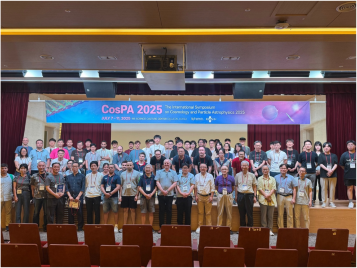
Dong-Won Jung
CosPA 2025 in Daejeon by Dong-Won Jung From July 7–11, 2025, the International Symposium on Cosmology and Particle Astrophysics (CosPA 2025) was held at the Institute for Basic Science (IBS) Science Culture Center in Daejeon, co-hosted by IBS Center for Theoretical Physics of the Universe – Center for the Geometry and Analysis of Spacetime (CTPU-CGA) and Korea Institute for Advanced Study (KIAS). CosPA is the annual Asia–Pacific meeting of the Asia Pacific Organization of Cosmology and Particle
More to ReadIf you'd like to subscribe to the AAPPS Bulletin newsletter,
enter your email below.
