
Vol.36 (Feb) 2026 | Article no.4 2026
For the promotion of research on physics in Asian Region, the Physical Society of Japan (JPS) and the Association of Asia Pacific Physical Societies (AAPPS) have jointly given the AAPPS-JPS Award for young JPS members who have achieved outstanding research results.
The 2026 winners of the fourth AAPPS-JPS Award are listed below.

Ryusuke Jinno
Associate Professor, Graduate School of Science, Kobe University
Theoretical Studies on Cosmological First-order Phase Transitions
Dr. Ryusuke Jinno has achieved important results in the theoretical study of gravitational-wave production associated with first-order phase transitions in the early Universe. He extended analytic methods for evaluating gravitational-wave production rates and established a formalism that incorporates the effects of particle production on the friction acting on domain walls. The methods to evaluate gravitational waves that he developed have been adopted in the analyses of observational projects and are highly regarded. He has also proposed new numerical techniques to handle the degrees of freedom of the Higgs field, enabling large-scale simulations. Furthermore, he has conducted a wide range of research in areas including neutrino physics, solitons, leptogenesis, Higgs cosmology, and applications of machine learning, thereby making significant contributions to our understanding of the early Universe from both theoretical and phenomenological perspectives. These remarkable achievements have the potential to lead to observational verification, and thus he is fully deserving of the award.
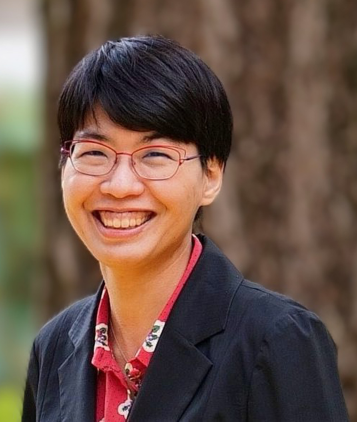
Marie Tani
Assistant Professor, Graduate School of Science, Kyoto University
Elucidation of Complex Physical Mechanisms Hidden in Everyday Soft Matter Phenomena
Dr. Marie Tani drives research to uncover universal physical laws hidden within macro-scale soft matter phenomena, using experiments, theory, and numerical simulations. Her most notable achievement is the study of flexible filaments wrapping around a rotating cylinder. She identified three stable configurations and precisely determined the conditions for their realization, governed by the complex balance of elasticity, gravity, and geometry. This highly original work deeply explores the physics concealed within everyday motions. Dr. Tani also provided crucial insights by expanding soft matter physics to new subjects. This includes establishing the design principle for creating specific three-dimensional shapes from flat Kirigami sheets and elucidating the patterns and mechanisms of scraping of foam on a substrate. Dr. Tani exhibits exceptional insight in identifying physically interesting, multi-factor research subjects (involving elasticity, fluid dynamics, friction, etc.) within daily phenomena and has significantly deepened the fundamental understanding of these fields. Her work is considered worthy of the AAPPS-JPS Award.

Akito Noiri
Research Scientist, Center for Emergent Matter Science, RIKEN
Development of Foundational Technologies toward Realizing Large-Scale Fault-Tolerant Semiconductor Quantum Computers
Dr. Akito Noiri has made important contributions to the development of semiconductor-based quantum computers using single electron spins confined in quantum dots as qubits. He has achieved three breakthroughs that have long been regarded as major challenges in this field. First, he realized high-fidelity qubit operations exceeding 99%, satisfying the requirement for fault-tolerant quantum computation. Second, he demonstrated, for the first time in semiconductor qubits, quantum error correction by constructing a logical qubit from three entangled qubits. Third, he established a novel long-distance two-qubit coupling technique that opens the path toward large-scale integration. These achievements were highly cited by the related community. The research made a significant impact on academia in quantum information and related fields. Dr. Noiri’s pioneering research places him at the forefront of quantum information science and makes him highly deserving of the AAPPS-JPS Award.

Misaki Mizumoto
Lecturer, Department of Education, University of Teacher Education Fukuoka
Instrumental, Observational, and Theoretical Study on Black Hole Outflow
Dr. Misaki Mizumoto is an outstanding early-career astrophysicist whose work has significantly advanced X-ray studies of winds from supermassive black-hole accretion disks. He developed influential theoretical models that successfully reproduce observed spectra of warm absorbers and ultrafast outflows, now widely used in interpreting X-ray data. As a leading member of the XRISM mission, he contributed to major discoveries, including the clumpy structure of SMBH winds and the contrasting behavior of winds from SMBHs and neutron stars. In addition, he has advanced microcalorimeter detector technology by quantifying performance variations under changing observational conditions. His remarkable academic achievements exhibit his talent, and he is expected to be one of the rising leaders in high-energy astrophysics based on his broad expertise in theory, observation, and instrumentation. Dr. Mizumoto’s work makes him highly deserving of the AAPPS-JPS Award.
ASEAN Quantum Summit 2025 was sponsored by strategic partners from
1. Tier II sponsors: the Johor state government, the Ministry of Digital Malaysia, and Quantinuum;
2. Tier III sponsors: Yaqumo, Open Quantum Institute (OQI), the Center for Quantum Technologies (CQT), Japan External Trade Organization (JETRO), Global Research and Development Center for Business by Quantum-AI technology (G-QuAT), and the Quantum STrategic industry Alliance for Revolution (Q-STAR); and
3. Tier IV sponsors: ABEX, the Quantum Technology Research Initiative Collaboration (QTRic), the Program Management Unit for Human Resources and Institutional, Development, Research and Innovation (PMU-B), SpeQtral Zurich Instruments, and Oxford Instruments.
ASEAN Quantum Summit 2025 was supported by stakeholders from
1. The Malaysian government: The Ministry of Higher Education Malaysia (MoHE), the Ministry of Digital Malaysia, the Ministry of Science, Technology and Innovation Malaysia (MOSTI), the Iskandar Regional Development Authority (IRDA), and the Malaysian Institute of Physics (IFM);
2. Local academia: UTMSpace, Universiti Putra Malaysia (UPM), Universiti Malaysia Perlis (UniMAP), Universiti Sains Islam Malaysia (USIM), Universiti Teknologi Mara (UiTM), International Islamic University Malaysia (IIUM), Universiti Kebangsaan Malaysia (UKM), Xiamen University Malaysia (XMUM), Universiti Malaya Center of Excellence Quantum Information Science and Technology (UM CoE QIST), and Malaysia Quantum Information Initiative (MyQI); and
3. International stakeholders and close collaborators, i.e., the Organization for Economic Co-operation and Development (OECD), the National Institute of Metrology (Thailand), Nicolaus Copernicus University (Poland), the Center for Quantum Information and Quantum Biology (QIQB), The University of Osaka (Japan), the National Quantum Office (Singapore), the Quantum Technology Research Initiative Collaboration (QTRic, Thailand), the Quantum Computing Society of the Philippines (QCSP, Philippines), VNQuantum (Vietnam), the Indonesian Quantum Initiative (IQI, Indonesia) and BRIN-Q, Geneva Science and Diplomacy Anticipator (GESDA, Switzerland), the Open Quantum Institute (OQI, Switzerland), and AQSolotl (Singapore).
The authors read and approved the final manuscript.
The authors declare that they have no competing interests.
Springer Nature remains neutral with regard to jurisdictional claims in published maps and institutional affiliations.
If you'd like to subscribe to the AAPPS Bulletin newsletter,
enter your email below.
