
Vol.35 (Dec) 2025 | Article no.1 2026
The 2025 AAPPS–APCTP C. N. Yang Awards were conferred on three distinguished and promising young physicists: Fanlong Meng (Chinese Academy of Sciences), Anatoli Fedynitch (Academia Sinica), and Junzhang Ma (City University of Hong Kong). For the 2025 competition, 36 nominations were submitted from nine regions, representing candidates from eight sessions of the Asia Pacific Physics Conference (APPC-16) (see Table 1). As in previous years, the nominations—carefully selected by member societies, divisions, and eminent experts—were of exceptionally high caliber, rendering the selection process both rigorous and highly competitive.
| Nationality | No. of candidates |
| Japan | 11 |
| Beijing | 10 |
| Taipei | 4 |
| Hong Kong | 3 |
| India | 2 |
| Korea | 2 |
| Indonesia | 2 |
| The Philippines | 1 |
| Vietnam | 1 |
| Total | 36 |
| Sessions | No. of candidates |
| Condensed Matter Physics | 14 |
| Nuclear Physics | 6 |
| Particles and Fields | 6 |
| Astrophysics, Cosmology and Gravitation | 4 |
| Quantum Information | 2 |
| Statistical Physics | 2 |
| Applied Physics | 1 |
| Atomic and Molecular Physics | 1 |
| Total | 36 |
The C. N. Yang Award was established to recognize and encourage young researchers who have demonstrated notable scientific achievements, and to foster the emergence of the next generation of leading physicists in the Asia–Pacific region. Traditionally, the award was presented during the Asia Pacific Physics Conference (APPC), held approximately every three years. Beginning in 2019, the Association of Asia Pacific Physical Societies (AAPPS) and the Asia Pacific Center for Theoretical Physics (APCTP) jointly launched the AAPPS–APCTP C. N. Yang Award as an annual distinction. The Award Committee is composed of members of the AAPPS Council, representatives of AAPPS Divisions, and renowned scholars recommended by APCTP. In 2025, the awards were formally presented at a special ceremony held at the Hilton Haikou Meilan, China, on Monday, 20 October 2025.
The selection of the C. N. Yang Award recipients is a multi-stage and highly demanding process, requiring careful and systematic evaluation at every stage. Key criteria include the originality and novelty of the candidates’ research, the significance and impact of their contributions, and their future potential as leaders in the field. The official citations and concise biographies of the 2025 C. N. Yang Awardees are provided below.
Fanlong MENG, Chinese Academy of Sciences
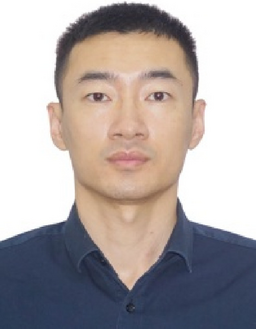
“For his outstanding contributions in developing statistical theories of soft and active matter”
Professor Fanlong Meng earned his bachelor’s degree in physics from the University of Science and Technology of China in 2010. He then completed his M.Sc. and Ph.D. at the Chinese Academy of Sciences in 2015, specializing in theoretical physics. Following his doctoral studies, Professor Meng held postdoctoral positions at several prestigious institutions. He conducted research at the University of Cambridge and the University of Oxford, deepening his expertise in soft and biological physics. He later joined the Max Planck Institute for Dynamics and Self-Organization as a Humboldt Fellow, where he investigated self-organizing systems. In 2019, he returned to the Chinese Academy of Sciences as an associate professor and was promoted to full professor in 2023.
Professor Fanlong Meng’s research has far-reaching implications across physics, materials science, and bioengineering. His studies on magnetic gels and active fluids help decode how microscopic interactions lead to macroscopic behaviors. This is crucial for designing smart materials that respond to external stimuli such as magnetic fields or mechanical stress. Meng’s models of ciliary motion and multiflagellate swimming offer insights into how microorganisms move and interact. These findings could inform medical research, especially in areas of respiratory health and fertility, where cilia play a vital role. By revealing how hydrodynamic forces can be harnessed to control particle motion, Meng’s research supports the development of microfluidic devices for diagnostics, drug delivery, and lab-on-a-chip systems. In addition, Meng’s discovery of Bose-Einstein-like condensation in magnetic microswimmers bridges classical and quantum physics, offering a new lens to study collective behavior in active matter. Professor Fanlong Meng’s research thus lays a powerful foundation for future studies across multiple scientific domains from fluid dynamics to bio-inspired applications.
Anatoli FEDYNITCH, Academia Sinica
“For his outstanding contributions to astroparticle physics, including leadership in atmospheric neutrino flux modeling and the creation of widely used software tools that have enabled major advances in cosmic ray and neutrino research.”
Dr. Anatoli Fedynitch received an MSc in Electrical Engineering, Computer Science (2008), Physics (2011) from Ruhr-University and a PhD from Karlsruhe Institute of Technology, Germany (2015). He was a postdoctoral fellow at DESY (2016–2018), University of Alberta (2019), and a JSPS fellow at ICRR, U. Tokyo (2019–2021), and has been an assistant research fellow at the Institute of Physics, Academia Sinica since 2021. He has been a full member of the IceCube Neutrino Observatory (2009–present) and is now the institutional lead of Taiwan and a convenor of the atmospheric neutrino NMO group. He has been a collaboration member of the Telescope Array (TA) Project since 2019.
Dr. Fedynitch is a recognized young leader in computational astroparticle physics. He has created widely used software frameworks (such as MCEq, Chromo, and PriNCe) and co-developed key interaction models, enabling the community to interpret cosmic-ray and neutrino data with confidence. He has rapidly become a key figure connecting the Asia-Pacific community to the global collaborations, particularly in strengthening the bridge between Taiwan and Japan. His contributions to theoretical innovation, practical software tools, and collaborative leadership have enabled major advances in our understanding of cosmic rays and neutrinos at IceCube, KM3Net, and TA UHECR experiments. He has published more than 300 papers, including many high-profile collaboration papers with a scientific impact of an h-index of 68 and more than 20,000 citations (inspire), and his non-collaboration works have received 59 citations on average.
Junzhang Ma, City University of Hong Kong
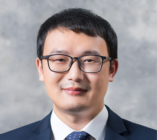
“For his outstanding discovery and characterization of multiple emergent quasiparticles across diverse crystalline systems”
Dr. Junzhang Ma completed his B.S. in Physics from Jilin University, China, in 2011. He later pursued his Ph.D. in condensed matter physics at the Institute of Physics, Chinese Academy of Science, completing his doctoral degree in 2017. Following this, Dr. Ma completed a two-year joint postdoctoral fellowship at the Paul Scherrer Institute (PSI) and École Polytechnique Fédérale de Lausanne (EPFL) in Switzerland, followed by an extension at PSI till the end of 2020. In 2021, he came to City University of Hong Kong as an Assistant Professor in the Department of Physics and was early promoted to Associate Professor in 2025, a position he holds to this day. He has won several awards including the Early Career Award (by Research Grant Council of Hong Kong, 2023) and DCMP Young Scientist Award—Silver Medal (by Association of Asia-Pacific Physical Societies—Division of Condensed Matter Physics, 2024). His work explores novel quasiparticles in quantum materials, particularly in topological materials, superconductors, and low-dimensional correlated materials.
Dr. Ma has successfully discovered and characterized various emergent quasiparticles across diverse crystalline systems. The key contributions include identifying three-component fermions and the related topological Fermi arcs in tungsten carbide [Nature Physics, 2018], hourglass fermions in KHgSb [Science Advances, 2017], spin fluctuating induced magnetic Weyl fermions [Science Advances, 2019], magnetic Dirac fermions [Advanced Materials, 2020], unpaired singular Weyl nodes [Nature Communications, 2021; Physical Review B, 2022], ideal and tunable surface Dirac fermions in kagome metals [Science Advances, 2022; Nature Communications, 2024]. Dr. Ma’s research extends to studying novel quantum quasiparticles induced by electron-electron and electron-boson coupling in condensed matter. This includes investigating mobile excitons in quasi-1D metallic material TaSe3 [Nature Materials, 2022], Cooper pairs and polarons in iron-based superconductor Ba2Ti2Fe2As4O [Physical Review Letters, 2014]. Dr. Ma’s research works demonstrate that condensed matter physics hosts a vast and varied type of quasiparticles with novel physical properties, and the quasiparticles host significant potential for application in quantum technology in the future. The quasiparticles in condensed matter often exceed the variety found in a few body physics. Dr. Ma’s research thereby deepens our understanding of quantum materials and reflects the profound emergent phenomenon that “more is different.”
No data were generated or analyzed during this article.
The Event Horizon Telescope Collaboration, First M87 Event Horizon Telescope results. I. The shadow of the supermassive black hole. Astrophys. J. Lett. 875, L1(17pp) (2019)
M. Honma, K. Akiyama, M. Uemura, and S. Ikeda, Super-resolution imaging with radio interferometry using sparse modeling. Publ. Astron. Soc. Jpn. 66(5), 95 (1–14) (2014)
The Event Horizon Telescope Collaboration, First M87 Event Horizon Telescope results. IV. Imaging the central supermassive black hole. Astrophys. J. Lett. 875, L4 (52pp) (2019)
The Event Horizon Telescope Collaboration, The persistent shadow of the supermassive black hole of M87 I. Observations, calibration, imaging, and analysis. Astron. Astrophys. 681, A79 (2024)
The Event Horizon Telescope Collaboration. First Sagittarius A* Event Horizon Telescope Results. I. The Shadow of the Supermassive Black Hole in the Center of the Milky Way. Astrophys. J. Lett. 930, L12(21pp) (2022)
I. Affleck, T. Kennedy, E. H. Lieb, and H. Tasaki, "Rigorous results on valence-bond ground states in antiferromagnets”, Phys. Rev. Lett. 59, 799 (1987); “Valence bond ground states in isotropic quantum antiferromagnets. Commun. Math. Phys. 115, 477 (1988)
T. Kennedy and H. Tasaki, Hidden Z₂ × Z₂ symmetry breaking in Haldane-gap antiferromagnets. Phys. Rev. B 45, 304 (1992)
M. Oshikawa, Hidden Z₂ × Z₂ symmetry in quantum spin chains with arbitrary integer spin. J. Phys.: Condens. Matter 4, 7469 (1992)
F. Pollmann, A. M. Turner, E. Berg, and M. Oshikawa, “Entanglement spectrum of a topological phase in one dimension”, Phys. Rev. B 81, 064439 (2010); F. Pollmann, E. Berg, A. M. Turner, and M. Oshikawa, “Symmetry protection of topological phases in one-dimensional quantum spin systems”. Phys. Rev. B 85, 075125 (2012)
M. Oshikawa, Commensurability, excitation gap, and topology in quantum many-particle systems on a periodic lattice. Phys. Rev. Lett. 84, 1535 (2000)
Website of the Division of Plasma Physics, Association of Asia–Pacific Physical Societies, AAPPS-DPP, http://aappsdpp.org/AAPPSDPPF/index.html. Accessed on 20 October 2025
S. A. Khan, Predhiman Krishan Kaw bags the 2015 Subrahmanyan Chandrasekhar Prize of Plasma Physics. Curr. Sci. 111 (03), 458 (2016). http://www.currentscience.ac.in/Volumes/111/03/0458.pdf
P. I John and A. Sen, Predhiman Krishan Kaw (1948–2017). Curr. Scie. 113 (2), 337–338 (2017). https://www.currentscience.ac.in/Volumes/113/02/0337.pdf
S. A. Khan, 2019 Subrahmanyan Chandrasekhar prize of plasma physics. Curr. Sci. 117 (10), 1561 (2019). https://www.currentscience.ac.in/Volumes/117/10/1561.pdf
S. A. Khan, 2020 Subrahmanyan Chandrasekhar Prize of Plasma Physics. Curr. Sci. 119 (9), 1401 (2020). https://www.currentscience.ac.in/Volumes/119/09/1401.pdf
S. A. Khan, The 2021 Subrahmanyan Chandrasekhar prize of plasma physics. Curr. Sci. 121 (12), 1529 (2021). https://www.currentscience.ac.in/Volumes/121/12/1529.pdf
S. A. Khan, The 2022 Subrahmanyan Chandrasekhar prize of plasma physics awarded to Arnab Rai Choudhuri. Curr. Sci. 124 (3), 286 (2023). https://www.currentscience.ac.in/Volumes/124/03/0286.pdf
S. A. Khan, The 2023 Plasma Prizes by the Association of Asia Pacific Physical Societies. Curr. Sci. 127 (3), 270–271 (2024). https://www.currentscience.ac.in/Volumes/127/03/0270.pdf
S. A. Khan, The 2024 Plasma Prizes by the Association of Asia Pacific Physical Societies. Curr. Sci. 127 (9), 1011–1012 (2024). https://www.currentscience.ac.in/Volumes/127/09/1011.pdf
Y. Liu and Q.G. Zong, Energetic electron response to interplanetary shocks at geosynchronous orbit. J. Geophys. Res.-Space. 120, 4669–4683 (2015). https://doi.org/10.1002/2014JA020756
Z.Y. Liu, Q. G. Zong, X. Z. Zhou, Y. X. Hao, A. W. Yau, H. Zhang, X. R. Chen, S. Y. Fu, C. J. Pollock, G. Le, and R. E. Ergun, ULF waves modulating and acting as mass spectrometer for dayside ionospheric outflow ions. Geophys. Res. Lett. 46 (15), 8633–8642 (2019). https://doi.org/10.1029/2019gl083849
Q. Zong, Magnetospheric response to solar wind forcing: ultra-low-frequency wave–particle interaction perspective. Ann. Geophys. 40 (1), 121–150 (2022). https://doi.org/10.5194/angeo-40-121-2022
A. Litvak, K. Sakamoto, and M. Thumm, Innovation on high-power long-pulse gyrotrons. Plasma Phys. Controlled Fusion. 53 (12), 124,002 (2011). https://doi.org/10.1088/0741-3335/53/12/124002
Chang Lee, Stationary states of electron-positron systems and their annihilation transitions. Sov. Phys. JETP 6, 281 (1958). J. Exptl. Theoret. Phys. (U.S.S.R.) 33, 365 (1957)
Xu. Zhan, D.H. Zhang, L. Chang, Helicity amplitudes for multiple Bremsstrahlung in massless non-Abelian gauge theories. Nucl. Phys. B 291, 392 (1987)
L. Chang, Z. Koba, Production of nuclear isobars in high energy nucleon-nucleon collisions. Nucl. Phys. 71, 673 (1965)
R.D. Field, Rajan Gupta, Steve Otto, and Lee Chang, Beyond leading order QCD perturbative corrections to the pion form factor. Nucl. Phys. B186, 429 (1981)
Lee Chang and Molin Ge, Frontier Problems of Quantum Mechanics (World Scientific, Singapore and Tsinghua University Press, Beijing)
L. Chang, Q. Zhai, R. Lü, Li. You, Number fluctuation dynamics of atomic spin mixing inside a condensate. Phys. Rev. Lett. 99, 080402 (2007)
P. Zhang, Yu. Zhenhua, Environment-induced information scrambling transition with charge conservations. AAPPS Bull. 34, 19 (2024)
Hu. Yu-Min, B. Lian, From the quantum breakdown model to the lattice gauge theory. AAPPS Bull. 34, 24 (2024)
R. Liu, X. Cui, Competing few-body correlations in ultracold Fermi polarons. AAPPS Bull. 34, 29 (2024)
R. Mei, C.X. Liu, Magnetic-resonance-induced non-linear current response in magnetic Weyl semimetals. AAPPS Bull. 35, 4 (2025)
R.B. Liu, M. Liu, S. Zhang, Macroscopic quantum tunnelling of a Bose-Einstein condensate in a Cubic-Plus-Quadratic Well. AAPPS Bull. 35, 5 (2025)
Qi. Zhou, Recovering dark states by non-Hermiticity. AAPPS Bull. 35, 8 (2025)
X.J. Liu, Hu. Hui, Exact calculation of spectral properties of a particle interacting with a one-dimensional Fermi gas in optical lattices. AAPPS Bull. 35, 9 (2025)
H.K. Jin, R.Y. Sun, Tu. Hong-Hao, Yi. Zhou, A promising method for strongly correlated electrons in two dimensions: Gutzwiller-guided density matrix renormalization group. AAPPS Bull. 35, 16 (2025)
Hu. Hui, J. Wang, X.J. Liu, Exact theory of the finite-temperature spectral function of Fermi polarons with multiple particle-hole excitations: diagrammatic theory versus Chevy ansatz. AAPPS Bull. 35, 21 (2025)
Authors read and approved the final manuscript.
Springer Nature remains neutral with regard to jurisdictional claims in published maps and institutional affiliations.
If you'd like to subscribe to the AAPPS Bulletin newsletter,
enter your email below.
